Workwear starts with the workplace
Plus Size Work Outfits for Real Office Dress Codes
The useful question is not whether an outfit looks professional in isolation. It is whether it fits your workplace, commute, schedule, and hours at a desk. Build plus size work outfits from those constraints, then repeat the pieces that earn their place.
Preview a Work Look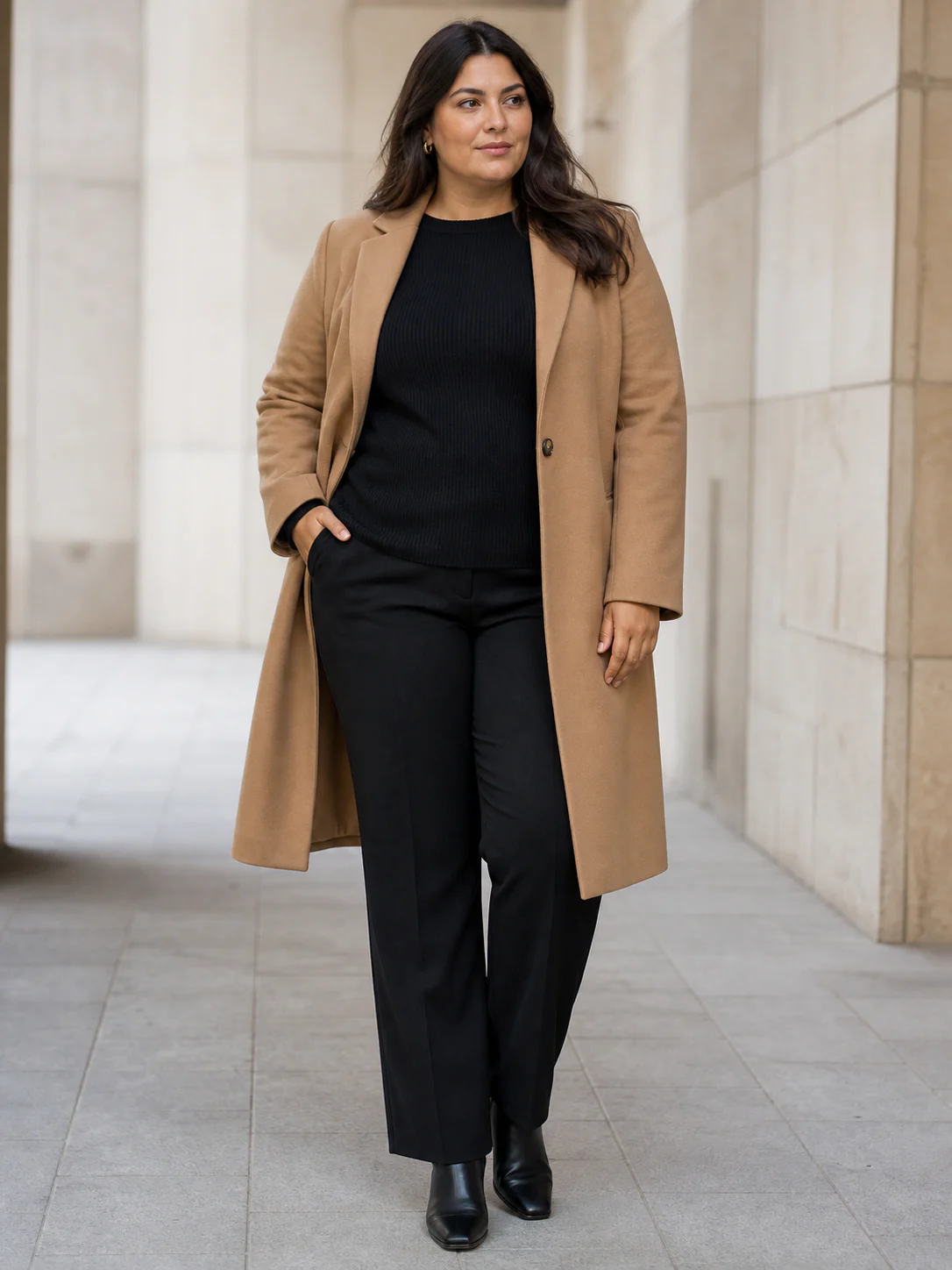
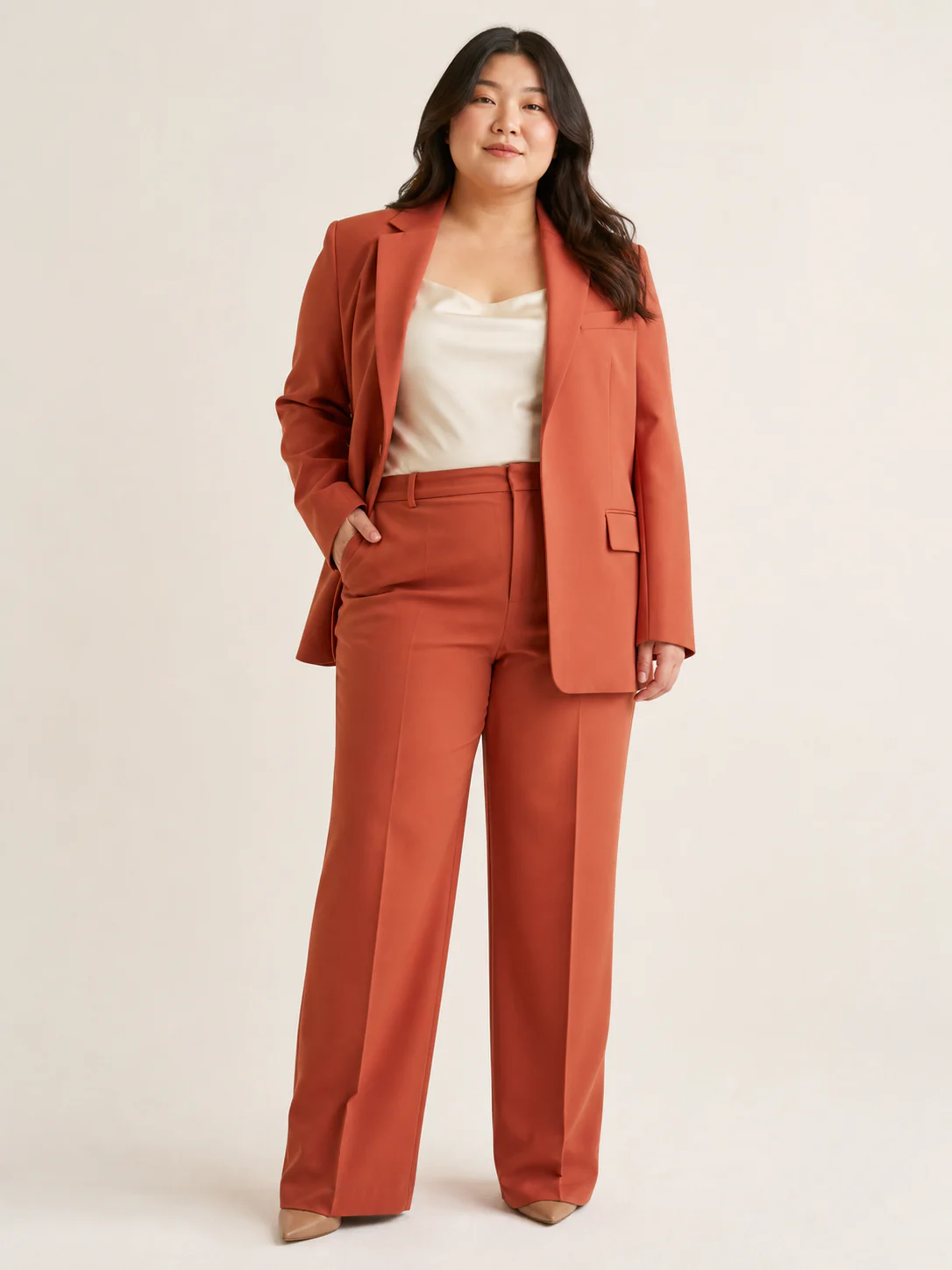
Quick answer
Professional is a dress code, not a silhouette
Most offices sit somewhere between business casual and formal, with their own rules about denim, footwear, sleeveless tops, and client meetings. Look at what decision-makers actually wear, read written policy, and plan for the most formal moment in your week. One tailored element is often enough for a relaxed office; a formal environment may require coordinated suiting, refined dresses, or a sharper shoe.
Reliable plus size work outfits allow sitting, reaching, commuting, and temperature changes without constant adjustment. A blazer should close if you need it to close. Trousers should stay comfortable after lunch and at a desk. Shirts should not pull across the bust. These are construction and fit questions, not instructions to make a body look smaller.
Plan by calendar pressure
A four-day workwear matrix with room to repeat
The goal is not five unrelated outfits. Use a small set of pieces differently as the week changes.
Comfortable base
Stretch trouser or midi skirt, breathable top, and a soft layer for long desk hours.
One tailored piece
Add a blazer, structured overshirt, or refined shoe to the same dependable base.
The sharpest version
Use coordinated tailoring, a polished dress, or a suit with a secure, camera-ready neckline.
Frame the upper body
Choose a solid or controlled print near the face, then keep the full outfit ready for errands or an office visit.
Observe before shopping
Translate plus size work outfits into your office dress code
Written policy is the first source, but office behavior supplies the detail. Are dark jeans common? Do client-facing teams wear jackets? Are sneakers accepted only on quiet days? Does the workplace become more formal when senior leaders or customers visit? Record what changes between ordinary and high-stakes days.
Then separate preference from requirement. You may prefer sleeves, a long line, or flat shoes even when the dress code allows other choices. Keeping those preferences visible prevents buying an aspirational work wardrobe that stays at home. The goal is a smaller set of clothes you can wear without negotiation each morning.
Many guides reduce plus size work outfits to blazers, pencil skirts, and “figure-flattering” dresses. Those pieces can work, but they are not universal. Creative offices, laboratories, schools, healthcare settings, warehouses, and remote roles place different demands on movement, safety, laundering, and presentation.
Written rules
Check policy for denim, footwear, safety, uniforms, sleeveless tops, and visible branding.
Observed standard
Notice what colleagues wear on ordinary days, presentation days, and client visits.
Movement needs
Account for stairs, standing, lifting, teaching, commuting, or long seated periods.
Your preferences
Keep the sleeve, shoe, color, and coverage choices that make the wardrobe usable.
Repeat the right things
Build a workweek from a few compatible pieces
Start plus size work outfits with two bottoms that work with the same three tops, then add one dress or one-piece option and two layers with different levels of structure. Shoes should cover the actual commute and office. Test whether the colors, lengths, and care requirements cooperate before buying more.
A useful set might include a dark wide-leg trouser, straight trouser or midi skirt, two washable tops, one fine knit, a soft jacket, and a sharper blazer. That is an example, not a mandatory checklist. Someone in a creative studio may replace the blazer with an overshirt; a formal office may need a matching suit and closed shoe.
Photograph combinations as you find them. The record matters most on rushed mornings. Strong plus size work outfits can repeat weekly without looking identical when the layer, shoe, or color relationship changes. Repetition also reveals which garment deserves a second color and which one never leaves the hanger.
Two dependable bottoms
Choose different silhouettes that share tops and shoes.
Three washable tops
Include at least one that works alone and one that layers cleanly.
Two levels of structure
A soft layer handles desk days; a sharper layer covers meetings.
One fast option
A dress, jumpsuit, or proven matching set reduces morning decisions.
Eight hours changes the fitting room answer
Test sitting, reaching, and the commute
Sit in the trousers or skirt for at least ten minutes. Check the waistband, front rise, back coverage, pocket bulk, and whether the hem changes around the ankle. For shirts, reach forward as if typing and raise your arms. Buttons that only pull when seated still pull during most of the workday.
A blazer needs enough room through the upper arm and back for the intended layer. If you never close it, that can be a deliberate styling choice, but the fronts should still hang cleanly. If formal situations require it closed, test that position while seated. A larger size followed by a simple sleeve or waist alteration may fit better than forcing one measurement.
Commutes add heat, weather, and carrying. Try the coat over the blazer. Walk with the actual laptop bag. Check whether a crossbody strap crushes the lapel or a backpack causes fabric to ride. Plus size work outfits should arrive in roughly the same condition they left home.
Hybrid work has two frames
Dress for the camera without forgetting the rest of the body
Video calls concentrate attention around the face and shoulders. In plus size work outfits, a controlled print, solid color, collar, or fine knit usually reads more clearly than a small high-contrast pattern. Check exposure and background so light and dark clothes retain detail.
The upper-body frame should not create a half-outfit. You may need to stand, meet someone in person, or leave for an appointment. Pair the camera-friendly top with a comfortable complete look. Keep a structured layer nearby if calls change formality during the day.
Presentation days benefit from a rehearsal. Test the outfit while gesturing, reaching for notes, and wearing a microphone or badge if required. Pockets, sleeve movement, and a secure neckline often matter more than a new trend.
Plan the visual system
Compare workwear garments on a consistent model
Plus Looks lets a fashion team upload clothing, select a preset model or upload a custom model photo, and choose views, backgrounds, ratios, and 1K or 2K output. For workwear, begin with a direct front view and a neutral studio background. Add a side or back view when pockets, vents, closures, or jacket length need explanation.
A generated image can compare silhouette, color story, crop, and model direction across a collection. It cannot prove comfort at a desk, fabric recovery, durability, pocket capacity, safety, or physical fit. Check the source garment against every result and reject altered checks, stripes, lapels, buttons, hems, hands, or body edges.
For a page of plus size work outfits, use the same model, crop, and background across related products. That continuity lets customers compare clothing. Save more expressive office scenes for a small number of campaign images after the product views are approved.
FAQ
Questions about plus-size workwear
What are easy plus size work outfits for business casual offices?
Try a tailored trouser with a washable top and soft jacket, a midi dress with a refined flat, or a dark jean with a structured layer if denim is accepted.
How many pieces do I need for a workwear capsule?
Start small: two bottoms, three compatible tops, one fast one-piece option, two layers, and the shoes required by your commute and dress code. Expand after testing combinations.
How should a work blazer fit?
It should allow the intended layer and comfortable arm movement. If you need to close it for formal situations, test it closed while seated as well as standing.
What works well on video calls?
Solid colors, controlled prints, collars, and fine knits usually read clearly. Check the top against your lighting and background, then complete the outfit for moments off camera.
Can an AI workwear image confirm garment fit or durability?
No. Generated images show a visual direction. Fit, stretch recovery, pocket capacity, care, safety, and durability need verified specifications and physical testing.
Build one week before building a wardrobe
Choose the office standard, upload one dependable garment, and test the model and image direction your collection needs.